




Tarangire National Park
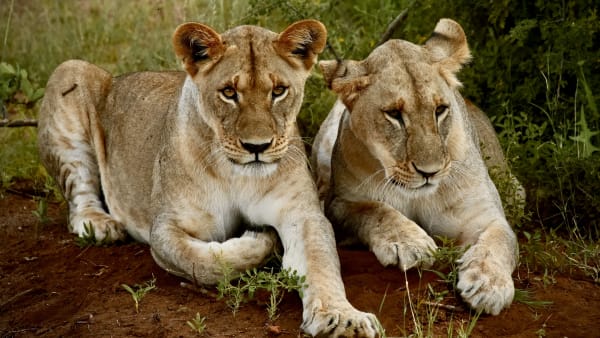
Home of the Tarangire Lion Research Project, whose two decades of lion records our students use to map home ranges.
Join us in northern Tanzania from May 9 to 15, 2027, for a week of field excursions and talks hosted by our Center for Wildlife Management Studies.
Space is limited, and we expect a waitlist.
Northern Tanzania is a patchwork of national parks, conservation areas, community rangelands and farming villages, and each one draws its own line between wildlife and people.
Our Center for Wildlife Management Studies sits in the middle of it. The campus is on a hillside in Rhotia, overlooking the Great Rift Valley escarpment, between the Tarangire-Manyara and Ngorongoro-Serengeti ecosystems. We have been part of the Rhotia community since 2010.
For one week, guests travel the way our students do, in SFS vehicles with lectures on the road and in the field. Field excursions and talks across our disciplines show where wildlife conservation and community life meet, and the environmental challenges the two share.

We are still setting the itinerary. These six excursions are likely, each with a traveling lecture along the way.
Home of the Tarangire Lion Research Project, whose two decades of lion records our students use to map home ranges.

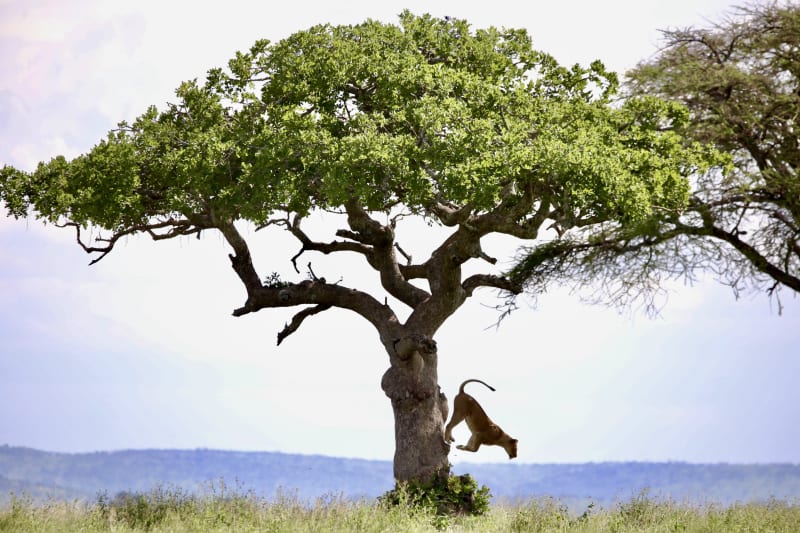
Overnight camping on the Serengeti's short-grass plains, the country our semester students cover on their camping expeditions.

The crater holds about 25,000 large mammals. It lies inside the Ngorongoro Conservation Area, a UNESCO World Heritage Site where Maasai pastoralists live alongside wildlife.

A cultural visit with Maasai families at their bomas, the homesteads where herding families live and keep their livestock.

Tours of Rhotia, the village around our center, along with Karatu town and the markets of Mto wa Mbu below the Rift Valley escarpment.

A community-based Wildlife Management Area, where our students have studied how invasive plants affect indigenous grasses.
Talks and traveling lectures will cover six themes. Each one is work our faculty and students carry out at the center today.
Wildlife here moves through national parks, conservation areas, community rangelands and farming villages, and each one manages it differently. Our Wildlife Ecology course follows predator-prey dynamics, primate behavior and small mammal communities across that mix, from Tarangire and the Serengeti to Lake Manyara.
Students interview Maasai pastoralists and document predation on their livestock. They record how livestock losses, grazing access and compensation shape support for wildlife protection.
Center Director Bernard Kissui is principal scientist of the long-term carnivore research project in the Tarangire-Manyara ecosystem. Students build lion home ranges in QGIS from two decades of Tarangire Lion Research Project records and meet the staff behind them at the project's research station in Tarangire.
Deputy Center Director John Mwamhanga established two of Tanzania's first pilot Wildlife Management Areas and now manages our community relationships across the Tarangire-Manyara ecosystem. In our Environmental Policy course, students map land and resource use with villages in the Lake Manyara catchment.
Lecturer Egidius James Rwebuga and colleagues conduct a long-term small mammal ecology project at the center, using rodents as indicators of environmental change. In Tarangire, students age and sex elephants from their morphology and behavior to build a picture of herd structure.
Students identify vegetation types and estimate plant abundance and cover in savanna plots to judge the health of a rangeland. Our Techniques in Wildlife Management course takes these assessments onto the plains near Lake Natron.
Each semester ends in Directed Research, faculty-led projects that students present to community leaders and Tanzanian wildlife authorities. Four recent ones are below, and the full record lists every project from the past few semesters.
Records gathered over 745 days along 113 km of road, worked into a map of where wildlife dies. The deaths cluster in hotspots, which is where the study says fences and crossings belong.
Surveyed the invasive plants spreading through the Burunge Wildlife Management Area and found the pattern plainly: wherever invasive cover rose, the diversity of indigenous grasses fell.
A camera trap grid across the Ndutu area recorded when mesopredators, the smaller carnivores, are active, and how their hours shift around the lions and the people sharing the same ground.
Carbon trading arrived in these villages only in 2021 and 2023. Students recorded what Lake Eyasi Basin residents already notice, setting a baseline the schemes can be judged against later.

We welcome applications from people who are new to SFS and from those who already know us and want to learn more about our Tanzania programs.
Please share this page with any faculty member or colleague in your office who would benefit from the visit.
Explore SFS TanzaniaMay 9 to 15, 2027. Travel to and from Tanzania is not included in these dates.
A $500 participation fee covers accommodations, site visit activities, local transportation and most meals. Guests pay for their own international travel, visas, immunizations and personal spending.
Guests stay in our shared student housing, and possibly in tents if we camp overnight. Single rooms are not available.
Between sessions, there is volleyball, soccer and frisbee at the center.
Expect long hours in SFS vehicles, often on bumpy roads, and long periods on your feet in the sun. The visit calls for moderate physical activity. Tent camping is possible, so guests should be comfortable sleeping on the ground.
Submit the Tanzania Site Visit Application by January 15, 2027. Space is limited, and we expect a waitlist.
Email sitevisit@fieldstudies.org.
Applications for the May 2027 site visit are due January 15, 2027.