About This Center
Where the Amazon Comes Alive
The trail drops from cloud forest into lowland jungle and the air thickens with every step. Bromeliads and orchids give way to buttress roots, bird calls change register, and by afternoon the same transect has passed through ecosystems that took millions of years to diverge. Near Tarapoto, in Peru's San Martín region, the Andes fold into the Amazon across one of the steepest elevational gradients on Earth, and along it more species per hectare crowd into the forest than almost anywhere else. The center sits at the edge of the region's main conservation area, where that gradient is both the laboratory and the lesson.
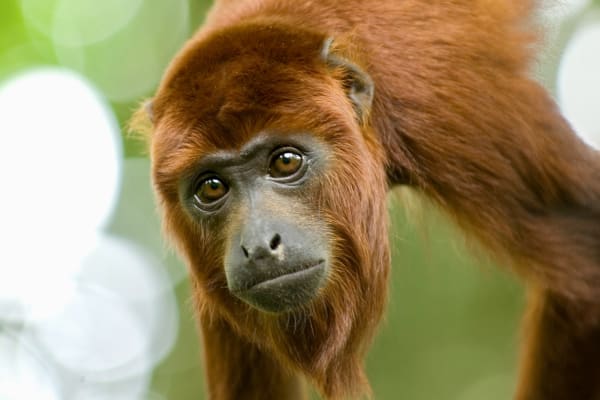
The campus itself is a two-acre clearing at the edge of Tarapoto, where the forest presses close enough that monkeys pass through daily and the bird list keeps growing from the balcony. A trail leads into the neighboring conservation area, where premontane forest climbs toward Sub-Andean ridgelines. Research follows that closeness: faculty and students track bats and hummingbirds, document medicinal plants and the knowledge that surrounds them, and partner with Indigenous communities like Chirikyacu, where the forest is held as kin. Few field stations put a working city, a protected mountain range, and this much biodiversity within reach of the same balcony.