


Four Weeks. One Island. Dolphins, Plastic, and Noise.
Boat traffic, underwater noise, and plastic are converging on the resident bottlenose dolphins of the northern Adriatic. From Lošinj Island, you'll work alongside Blue World Institute scientists to document what's at stake.
Deploy hydrophones to record dolphin calls, run photo-ID surveys from research boats, tow manta nets for microplastic sampling, and assess sea turtle health at the rescue center.

What You'll Do

Bioacoustics & Dolphin Surveys
Record dolphin calls with hydrophones, run photo-identification surveys from research boats, and analyze the acoustic data in lab workshops that generate spectrograms.

Microplastics & Marine Litter
Tow manta nets, pilot underwater drones, and snorkel seagrass meadows to map plastic contamination from seafloor to surface.
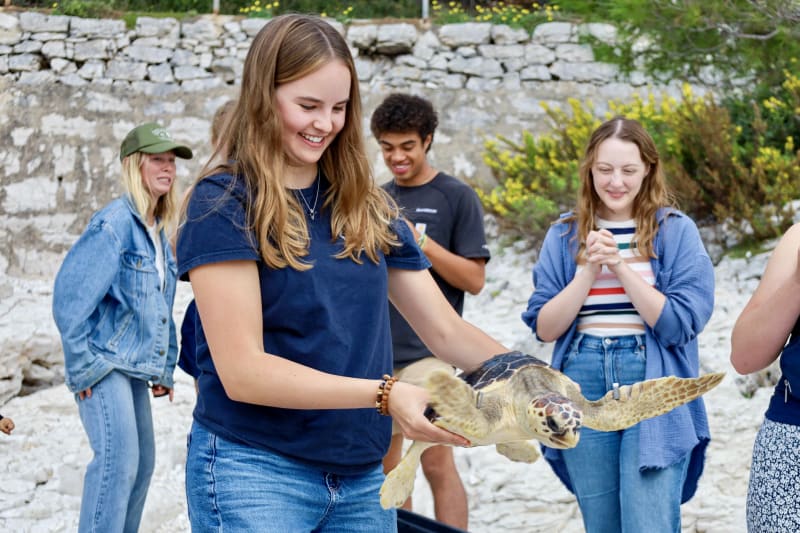
Sea Turtle Health Assessment
Volunteer at the Blue World rescue center: help with daily turtle care, run health checks, and trace plastic ingestion to population-level threats.
Field Sites
Your home base is Lošinj island: from there, the whole archipelago is your classroom.

Veli Lošinj
Home base steps from the Blue World Institute research center and the sea turtle rescue facility.

Open Adriatic Waters
Photo-ID transects, hydrophone deployments, and manta net tows for microplastics.

Coastal Ecosystems
Posidonia seagrass meadows and island bays where you snorkel to map marine litter.
The Pollutants You Can't See Are the Ones That Matter
Students tow manta nets through the water column to collect floating plastics, snorkel seagrass meadows to assess debris accumulation, deploy underwater drones to survey the seafloor, and conduct beach assessments sorting macro litter, meso-plastics, and sediment-core microplastics. In the rescue center, necropsies of deceased turtles reveal ingested plastics that never made it to a beach survey. Nine hours of boat-based surveys combine dolphin photo-ID with acoustic data collection and navigation logging. The two themes, noise and plastic, converge on the same animals in the same water.
Learn by Doing
Most days start on a boat, not in a lecture hall. One course blends cetacean bioacoustics, microplastic sampling, and sea turtle triage into daily fieldwork across the northern Adriatic.
Course
One course blending classroom sessions with daily fieldwork
Investigates how noise and plastic pollution affect Adriatic dolphins and sea turtles through hydrophone deployments, photo-ID surveys, manta net tows, and rescue center health assessments.
View Syllabus (PDF)Spend Your Summer in the Adriatic
Now enrolling for Summer 2027.
Dates & Costs
4 weeks, 4 credits. Financial aid and SFS scholarships available.


