1984 to 2025
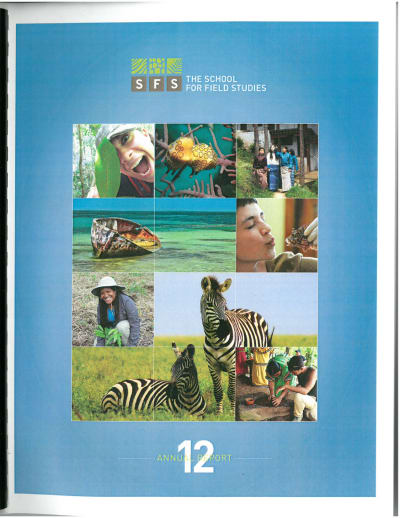
Every Report We Have
Four decades of our work, set down for the record.
Four decades of our work, set down for the record.
An annual report is a yearly accounting. It is written for the people who do the work, our students and faculty, and for the trustees who steward it. It is also for the donors and partners who make the work possible. The reports collected here begin in 1984, when The School for Field Studies was a young organization still inventing the field semester. By the most recent one we have field research centers around the world.
Read in sequence, they tell the same story the program catalogs do, from a different angle. The catalogs set out what we believed, and these reports record what we did with each year. Each one covers that year’s programs and research, any centers we opened, the local communities we worked with, and the people who supported it all.
Not every year survives in print, and this collection is simply what we have. Read together, the reports that remain cover four decades of work built on one belief, that the best way to understand the world is to live and work inside it.
These are the earliest reports on record, written only a few years after our founding. We were a small operation then. In these years we invented the twelve-week field semester and opened our first permanent centers.
We stayed put in the nineties, and the reports follow our research centers as they settled into the landscapes and communities around them. The long-term relationships that came out of those years became the school’s signature.
With a quarter century of alumni behind us, these reports take stock, and the writing is more deliberate. They begin to talk about systems and stewardship. Climate enters the vocabulary too.
This was a decade of expansion. We opened new centers across more of the world, and applied research moved to the center of our purpose. The reports from these years show us hitting our stride.
There is one report so far this decade, the 2025 edition, which picks the record back up after a six-year gap. It finds us with twelve centers, still making the case we started with.