Resilience Is the Research Question
Mornings begin with fresh mangoes from the trees outside your door. The SFS center sits on an active farm in Costa Rica's Central Valley, its vegetable gardens, greenhouse, edible forest, and mushroom production facility surrounded by forests that descend toward the Rio Grande. Five percent of the planet's biodiversity lives in this country. The question driving every course here is whether the systems protecting it can hold.
At the center, you climb trees to set canopy camera traps and co-design a school garden with children from the village below. Excursions push outward: catching bats by headlamp in rainforest on the Caribbean slope, designing field experiments in fire-adapted dry forest, walking montane páramo above the cloud line. Every lecture connects to something you can see, touch, or taste.

What You'll Do

Cloud Forest & Dry Forest Ecology
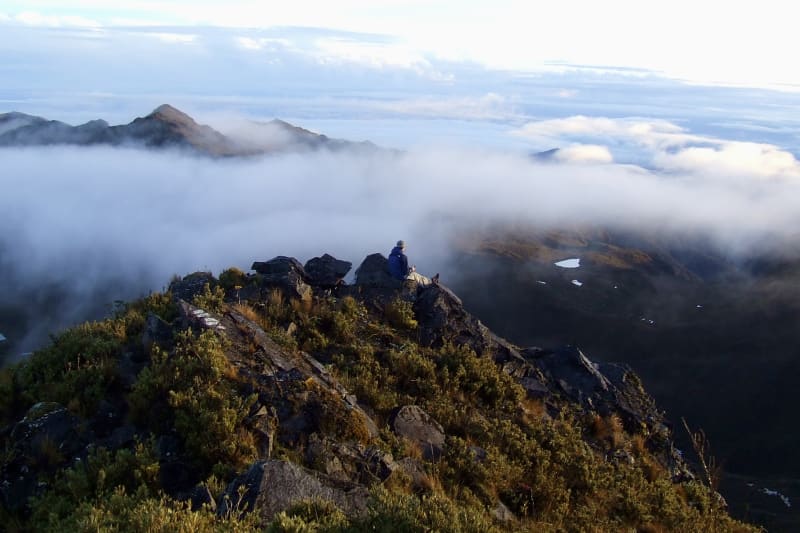
Survey species diversity from mist-draped cloud forest canopy to fire-adapted dry forest: two ecosystems, one semester, wildly different rules.

Canopy Camera Trapping
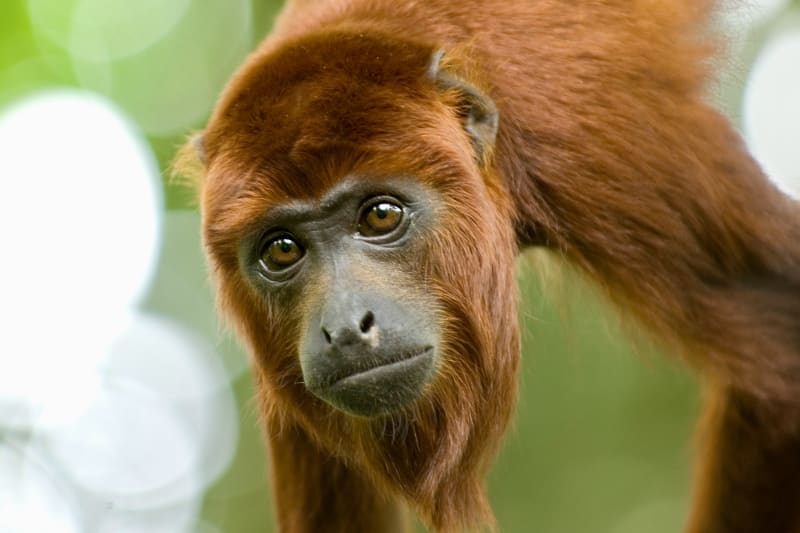
Climb trees to deploy camera traps in forest fragments, then process footage with Digikam to identify arboreal mammals moving through the canopy.

Rainforest Mammal Surveys
Capture and identify bat species in Caribbean-slope rainforest to study their ecological role in pollination, seed dispersal, and pest control across fragmented landscapes.

School Garden Co-Design
Partner with a local elementary school to co-design a garden: assessing needs, planning accessibility, and creating learning projects that outlast the semester.

Indigenous Food Sovereignty
Visit the Quitirrisí community to study food security as commons, seed sovereignty, and the deep connection between land rights and nourishment.
GIS & Land-Use Mapping
Build land-use maps in QGIS from aerial imagery and GPS data, then share mammal conservation findings with local partners.
Field Sites
From cloud-forest canopy to valley-floor coffee farms, your classroom stretches across six distinct tropical ecosystems.

Cloud Forest
Over 400 bird species along misty trails, and the story of the now-extinct Golden Toad.

SFS Campus Farm
Vegetable gardens, a greenhouse, and an edible forest, all a living laboratory for agroecology.

Dry Forest & Caribbean Rainforest
Multi-day excursions for student-designed experiments, amphibian surveys, and bat ecology.
Five Percent of Life on Earth. Cloud Forest to Páramo.
Students climb into canopy to deploy camera traps, catch bats by headlamp in fragmented forests, and design field experiments in dry forest that conservation teams have spent decades restoring. In cloud forest towns, they survey tourism impacts for a local origin certification. In an Indigenous community, food sovereignty is the morning's harvest, the seed-saving and subsistence farming students document firsthand. Fifteen weeks to cross cloud forest, dry forest, rainforest, and páramo, asking whether Costa Rica's corridors are healing or just holding.
Science Rooted in the Landscape
Five courses weave tropical ecology, natural resource management, and environmental justice into a field-driven semester. Students design biodiversity experiments in the dry forest, survey bat communities on the Caribbean slope, map mammal corridors in QGIS, and co-design school gardens with local children, all building toward Directed Research that contributes to the center's five-year research plan alongside community and conservation partners.
Courses
Five courses integrating tropical ecology, agricultural science, and conservation policy, all grounded in Costa Rica's living landscapes.
Surveys Costa Rican ecosystems from Caribbean rainforest to cloud forest to high-altitude páramo through multi-day excursions and biodiversity assessments.
View Syllabus (PDF)Studies mammal conservation through canopy camera trapping, bat diversity surveys, community water association visits, and GIS mapping of fragmented forest corridors.
View Syllabus (PDF)Examines indigenous land rights, seed sovereignty, and agrotourism through visits to indigenous communities, regenerative farms, and a school garden co-design.
View Syllabus (PDF)Spanish at beginner, intermediate, or advanced level with cultural field visits to coffee plantations, the central market, and community service tree planting.
View Syllabus (PDF)Faculty-led research for the center's five-year plan: past projects include arboreal mammal connectivity around Atenas, coloration in highland neotropical salamanders, and honey production and agrotourism in the Bellbird Biological Corridor.
View Syllabus (PDF)

Your Semester in Costa Rica Starts Here
Apply now to join the next cohort at the Center for Ecological Resilience Studies.
Dates & Costs
Semester program: 15 weeks, 18 credits. Financial aid and SFS scholarships available.