


Spring 2026
The Status of Lions in the Amboseli Ecosystem
A second season tracking how many lions Amboseli holds and where they range across the ecosystem. Heavy March rain remade the landscape and scattered both the cats and their prey.
In the shadow of Kilimanjaro, students study endangered wildlife and work with Maasai communities to balance conservation with human livelihoods.
Dust rises behind the research vehicle as a family of elephants crosses the track: the matriarch unhurried, calves tucked between her flanks and the younger females. In Amboseli, these families have been identified individually since the 1960s. Their births, deaths, and migrations form one of the longest continuous large mammal datasets on the continent. The SFS Center for Endangered Species Conservation sits in the Rift Valley foothills of Kilimanjaro, surrounded by national parks and Maasai conservancies, each testing a different answer to the same question: how do you keep megafauna alive on land that people also need?
Students age and sex elephants from open-roofed vehicles, matching tusk curves and ear notches to a photo identification catalog that grows with every cohort. At Ol Pejeta Conservancy, they monitor how black rhinos are reshaping stands of whistling acacia, the keystone species that makes up three-quarters of the rhino's diet. In Maasai rangelands, they interview farming families about crop-raiding elephants and the compensation funds that determine whether communities tolerate the lions among them. Semester students carry the thread to Rwanda, spending about a week studying mountain gorillas in Volcanoes National Park with the Dian Fossey Gorilla Fund, linking two of the continent's most critical conservation frontlines.


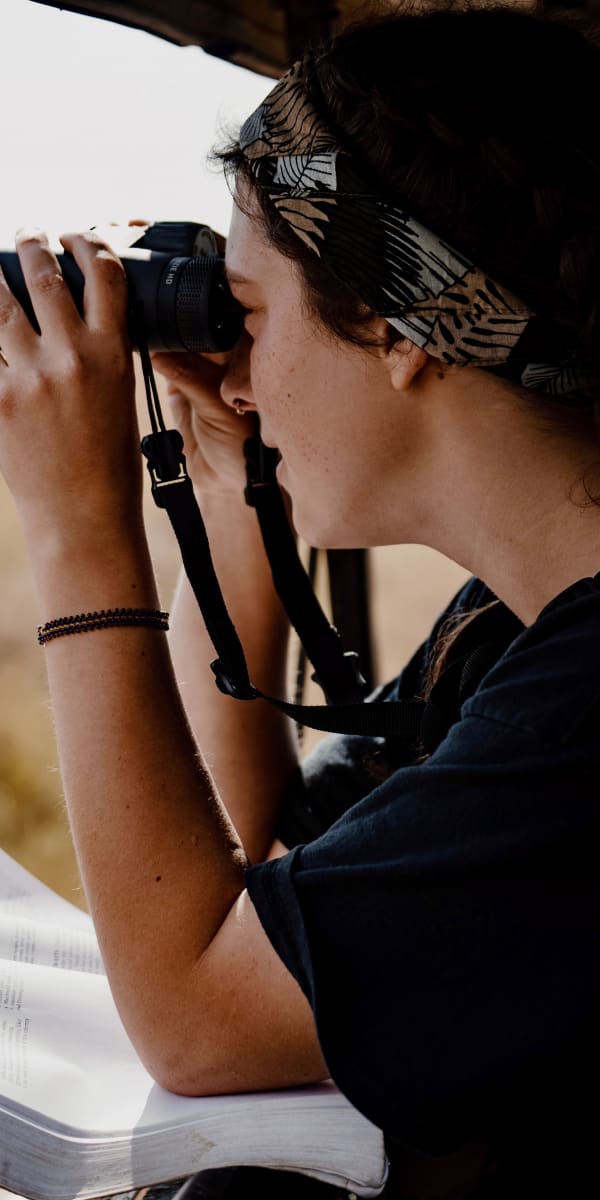


A second season tracking how many lions Amboseli holds and where they range across the ecosystem. Heavy March rain remade the landscape and scattered both the cats and their prey.
Whether people and wildlife can share Amboseli is a question for households, not transects. Students interviewed communities across the ecosystem to find what tips the balance.
Mapped hyena dens across the Amboseli ecosystem, worked out what the animals hunt, and sat down with the households living nearest them. Long distances between dens made for long days.
Grey crowned cranes are endangered across Africa and tied to wetlands under pressure throughout the Amboseli basin. Students counted them inside the park and beyond, extending an earlier survey.
The 13-acre center sits on the edge of the Kimana wildlife corridor. Students sleep in shared bandas (cabins), eat together in an open dining hall, and wake to views of Kilimanjaro most mornings. Game drives, walking transects, and community visits fill every week, with multi-day expeditions to Amboseli, the Maasai Mara, and Ol Pejeta.
Students join Maasai families for six-hour homestays, visit the Osiligi Women Network in Oloitokitok, attend the Kimana livestock market, and present a fifteen-minute storytelling documentary to community partners and the Kenya Wildlife Service at semester's end. Semester students also spend about a week in Rwanda studying mountain gorillas with the Dian Fossey Gorilla Fund.

Enrolling now for Spring 2027, Summer 2027, and Fall 2027.


