


Four Weeks. Patagonian Winter. Raw Discovery.
While the Northern Hemisphere bakes, Patagonia enters its wild winter: short days, snow-dusted peaks, and a landscape stripped bare. This is field science with crampons, a notebook, and wind that never quits.
Based in Puerto Natales, you'll work in Torres del Paine, hike to glaciers, and observe guanacos across the frozen steppe. Winter strips Patagonia to its bones, and the fieldwork follows: snowpack mass balance, glacial-river macroinvertebrates, and wildlife on the open steppe.

What You'll Do

Winter Glacier Fieldwork
Hike to Grey Glacier in Torres del Paine, measure snowpack energy and mass balance, and study how the winter water cycle shapes the ice.
Winter Wildlife Observation
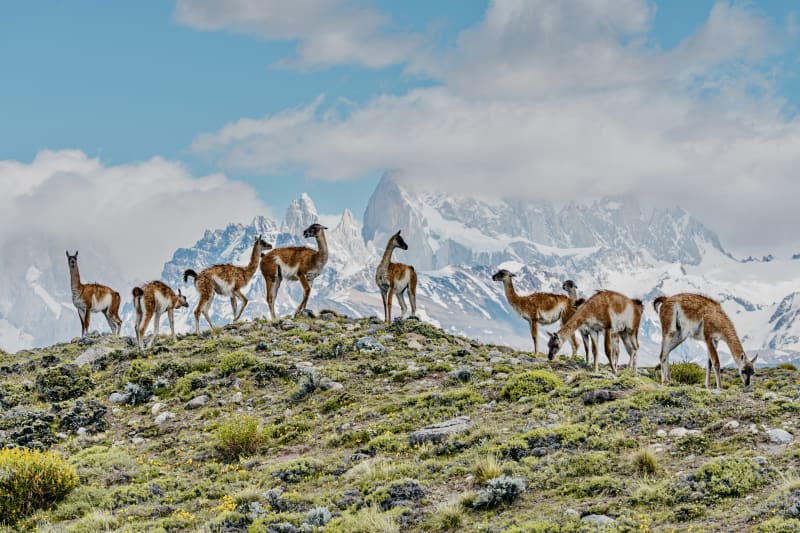
Observe guanacos and rheas across the snow-dusted steppe, studying how Patagonia's harshest season reshapes animal behavior and winter adaptations.

Estancias & Indigenous Knowledge
Visit ranches for winter livestock practices, learn from Kawesqar people about life in the fjords, and celebrate the Mapuche-Williche We-Tripantu winter solstice.
Field Sites
Torres del Paine in winter: when the tourists leave and the science begins.

Torres del Paine
Granite towers, glacial lakes, and guanaco herds on their winter range, in the park's quietest season.

Patagonian Steppe
Windswept grasslands where guanacos and rheas endure Patagonia's harshest season.

Glacial Valleys
Approach glacier termini on foot to document winter ice, snowpack, and glacier mass balance.
Winter Strips Patagonia to Its Bones
Short days. Snow on the peaks. Guanacos and rheas preparing for the season on open steppe. This program follows the U.S. academic calendar and runs during the Southern Hemisphere winter, when temperatures hold in the mid-twenties to upper forties Fahrenheit. Students measure snowpack energy and mass balance, sample aquatic macroinvertebrates in glacial rivers, and explore the southernmost broadleaf evergreen forests on Earth. Kawesqar indigenous knowledge and the Mapuche-Williche We-Tripantu solstice celebration connect the climate science to communities who have tracked these winters for generations.
Learn by Doing
One course spans glaciology, steppe ecology, and indigenous winter knowledge through four weeks of fieldwork where the data is frozen into the landscape itself.
Course
One intensive field course, 4 credits
Studies the winter water cycle, guanaco ecology, Magellanic forest adaptations, estancia livestock practices, and Kawesqar indigenous knowledge of the winter solstice.
View Syllabus (PDF)Join This Summer
Now enrolling for Summer 2027.
Dates & Costs
4 weeks, 4 credits. Financial aid and SFS scholarships available.


