


Four Weeks. Apex Predators.
A lioness flattens into the grass. A hyena calls from somewhere in the dark. The carnivores of the East African plains are ecologically vital and increasingly threatened, and this program puts you in their territory.
You'll map lion home ranges in QGIS from the Tarangire Lion Research Project's long-term records, observe apex and mesopredators in the field, and interview pastoralist households documenting the real economic cost of living alongside large carnivores.

What You'll Do
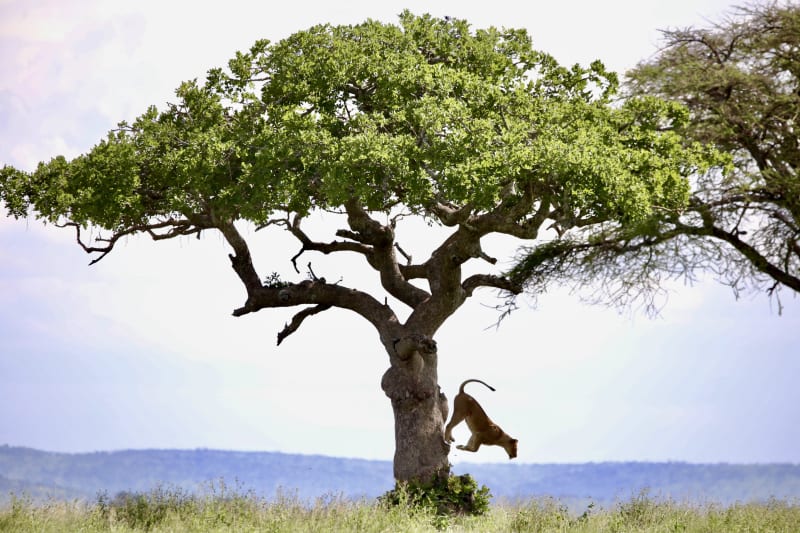
Lion Home Range Mapping
Build and analyze lion home ranges in QGIS using long-term movement records from the Tarangire Lion Research Project.

Predator Field Observations
Observe apex and mesopredators in the field, recording behavior and signs to understand how carnivores partition the same landscape.

Livestock Depredation Surveys
Interview pastoralist households and document predation events to quantify the economic impacts of carnivore coexistence.
Field Sites
Field sites span the Tarangire-Manyara and Ngorongoro-Serengeti ecosystems and the community rangelands between them.

Ngorongoro-Serengeti Ecosystem
An expedition where predator-prey dynamics play out across open savanna and acacia woodland.

Tarangire Lion Research Project
A research station in Tarangire where students meet the staff behind two decades of lion monitoring.

Maasai Community Rangelands
Pastoral lands where students interview herders about human-carnivore coexistence.
Lions, Cheetahs, Wild Dogs. One Shrinking Range.
A lioness flattens into the grass. A hyena calls from somewhere in the dark. Lion, cheetah, wild dog, leopard, and spotted hyena, the apex predators of the East African plains, are ecologically vital and increasingly squeezed between expanding settlements and shrinking corridors. Students map lion home ranges in QGIS from two decades of Tarangire Lion Research Project records, observe apex and mesopredators in the field, and interview pastoralist households documenting the real economic cost of living alongside large carnivores. The data shapes how these animals survive, and whether the communities that share their rangelands will let them.
Predator Ecology in the Field
This 4-credit course covers carnivore behavioral ecology, population monitoring techniques, and the socioeconomic dimensions of human-predator conflict. You'll collect and analyze field data that contributes to ongoing SFS predator monitoring, including the long-term Tarangire Lion Research Project.
Course
1 course · 4 credits · 4 weeks
Studies the ecology, behavior, and conservation of Africa's large carnivores across northern Tanzania's savanna ecosystems.
View Syllabus (PDF)Track Predators This Summer
Now enrolling for Summer 2027.
Dates & Costs
4 weeks, 4 credits. Financial aid and SFS scholarships available.


