


Four Weeks. Ancient Forests. Endangered Giants.
Asian elephants mourn their dead, recognize themselves, and maintain deep family bonds across decades, yet wild populations are vanishing as habitat shrinks. This program takes you into Mondulkiri's forests to study them up close.
At the Elephant Valley Project, you'll observe foraging behavior in evergreen forest, assess welfare alongside veterinary staff, and walk conflict zones where wild elephants cross Bunong farmland, deep in Cambodia's eastern highlands and a world apart.

What You'll Do

Elephant Ecology & Welfare
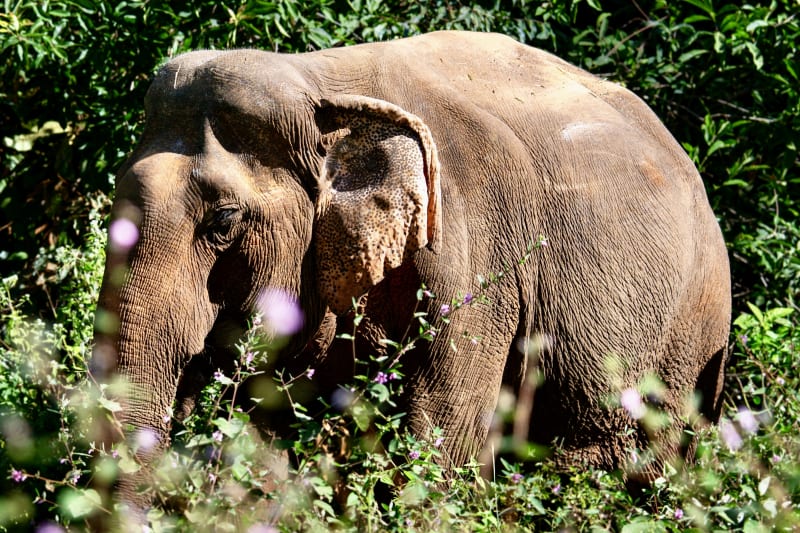
Observe foraging behavior at the Elephant Valley Project, assess welfare in captivity, and learn anatomy through hands-on physical exams and parasite workshops.
Human-Elephant Conflict
Visit conflict zones where wild elephants cross with local communities and interview Wildlife Conservation Society staff on coexistence strategies in Mondulkiri.

Angkor & Cultural Context
Journey from the ancient cities of the Khmer Empire to Cambodia's modern capital, Phnom Penh, tracing the nation's deep-rooted cultural bond with elephants.
Field Sites
From Siem Reap to the Elephant Valley Project in Mondulkiri: four weeks immersed in Asian elephant conservation.

Siem Reap & Angkor
Your gateway to Angkor Wat, Ta Prohm, and Bayon, and to the Angkorian Terrace of the Elephants.

Elephant Valley Project
Fieldwork in Mondulkiri: watching elephants forage in evergreen forest and meeting Bunong mahouts.

Phnom Penh
The Royal Palace, the National Museum, and the S-21 Genocide Museum.
Elephants That Know Their Own Reflection.
Asian elephants recognize themselves, maintain family bonds across decades, and mourn their dead, yet their wild range is shrinking fast. At the Elephant Valley Project, students observe foraging behavior and plant selection in evergreen forest, conduct welfare assessments alongside veterinary staff, and perform anatomy exams and parasitology workshops. Field trips to human-elephant conflict zones bring Wildlife Conservation Society staff interviews and the reality of wild herds crossing Bunong farmland.
Learn by Doing
One course spans elephant ecology, cognition, and veterinary care through field observation at the Elephant Valley Project, welfare assessments, physical exams, parasite workshops, and a conservation grant proposal presentation.
Course
One intensive field course, 4 credits
Studies Asian elephant ecology, cognition, and welfare through field observation at the Elephant Valley Project, anatomy practicals, human-elephant conflict visits, and a conservation grant proposal.
View Syllabus (PDF)Join This Summer
Now enrolling for Summer 2027.
Dates & Costs
4 weeks, 4 credits. Financial aid and SFS scholarships available.


